Paris, 2009 (photo by Roland Kato)

Paris, 2009 (photo by Roland Kato)

Wednesday, November 22, 2017

Sri Lanka - Mirissa, November 6-7


After a week in the mountains, we are at the sea.  This morning, we woke up in Casa Colombo. In Mirissa, near the southern tip of the island of Sri Lanka.  A small hotel of 6 or so rooms, a few dozen feet from the Indian Ocean. We cannot bathe in the sea in front of Casa Colombo. The sand drop-off is too steep. The current too strong. The waves too crashing.  That is okay because fifteen minutes down the shore, past a field where long legged white egrets sit atop curly-horned black water-buffalo, and past a temple where an orange-robed mahogany-skinned teen-aged novice monk plays with a dog on the sand — oh, dogs, there are lots of them, everywhere, lazy bones, asleep on the beach, barely raise an eyelid when we pass — is a rock sheltered cove with the best warm, idyllic, gentle water. That is where our day began.

We arrived to Mirissa in time for my birthday. What a way to celebrate with the warm water of the Indian Ocean lapping at your toes and a glass of fresh pineapple juice in your hand and your husband and dear friend beside you.

After our morning dip, we rode a tuk tuk down the road to a beach, where there was a string of on-the-sand shanty pubs, where a chaise and umbrella were included with your drink. The sand was marshmallow soft to walk on. The water was warm and luminous. We were in those chaises. Under a tree. We drank fresh lime juice with soda and a pineapple lassi blended to order, both were tart and sweet. The surrounding scenery was ideal and idyllic. The usual green foliage sprouted from the usual red earth, but this time with sun glinting on the sea, and a sky of deep blue. At last, on this  strip of beach, we are not conspicuous — not the lightest skinned in the crowd. There were German and French couples. Their small children ran naked at the water's edge.

Wes and Sepali have gone for a walk. I am alone. This is the life. Exiled on the shore of paradise. Warm celadon water. The sandy beach is narrow. The tide comes closer with each lick. Soon, it'll be under my chair.

Sepali and Wes return from a beach walk. I am informed I will be eating rice and milk for my birthday. Poor Marlow. (I play along). We pack up and leave the chaise and umbrella. How sad, milk and rice for birthday lunch.

We arrive at Zephyr, a restaurant, (a few paces from the chaises), on the sand. Once seated, a bottle of Venetian wine arrives followed by a dramatic platter: a whole grilled mullet (fish). Then a second platter. Two spiny lobsters, split and grilled with sharp foot long tentacles. It is a dreamy setting. The surprise is nice. On their walk, they stopped in the restaurant, inspected all the fish, ordered lunch, them came to sweep me off my feet. It was a sedate Sri Lanka bacchanal. We ate with our fingers. We laughed and smiled. It was joyous. A warm breeze wafted over us. Everything was good. Several days, in that fashion, melted into one.

Later, in the afternoon, I went for a body scrub with a blend of cinnamon, cardamom, clove. Dredged in spices, I closed my eyes and drifted off.

Sunday, November 19, 2017

Sri Lanka - Nuwara Eliya to Ella to Mirissa, November 5, 2017


Train day. The weather is good. We packed up, had breakfast (tropical fruits, Ceylon tea, curries, etc.) and checked out of the St. Andrews. Just before we left, the "nephew" arrived for a quick farewell. We sat in a parlor. Outside the windows were the tea pot and tea cup topiaries and gardens.

The van drove us to the Nanuoya Station for the train.  We will race him to Ella where he will fetch us.

En route to the train station we passed terraced tea plantations.  One had a large sign, "Edinburgh", evidence of 19th Century British colonial roots. A tea picker was at work one terrace above the road. One glance in his direction and he smiled. He beamed. Bright white teeth against a golden brown face. A large straw basket lashed to his back. His head wrapped in a scarf and topped with a hat.


The Nanuoya Station is modest and small in a tropical paradise setting.  To enter the platform we showed our tickets. There were waiting rooms: one for men and one for women. Toilets for locals and toilets for foreigners. The crowd was mixed. Scruffy foreign backpackers, Sri Lankans, Tamils, Muslims.


The train had a nice rhythm. Chuck uh choo, Chuck uh choo, Chuck uh choo. We sat in the only first class car.  That meant air conditioning and assigned seats. Our seats were filled with locals picnicking. For tupperware they had banana leaves unfolded with rice or curried something inside. A pinch of rice, a drip of curry, no fuss. It smelled good. We showed them our tickets. They smiled and shifted to another row. Later, they offered us sweets. Coarse ground sesame mixed with jaggery (local brown sugar) and pressed into a small square.

The train traveled on a high ridge. Most of our vista was on one side; a deep green valley. Enormous and long. With small villages and green tea terraces. Rivers and forests. We walked between train cars to get the unobstructed view, through the open door. A young guy, in Indiana Jones hat, with the same idea, sat on the floor. His bare legs dangled out the side. His head, too, was outside like a dog at a car window.

One time we stopped beside an opposing train. Faces smiled at us from few feet away.


After two and a half hours, we arrived in Ella. The small station was a hive. A buzz of excitement. It seemed both a destination and a point of departure, a nexus. Through the crowd, we saw our van driver's smiling face. Ella, as we drove through it, had a college town hippy coffee house beach bum ambiance. Lots of young adults casually idling.

The daylight was slipping away. Our destination was four hours away. The mountain roads twisted and curved. Abrupt stony, green mountains around each bend.  After a while, we took a break at a fruit hut. It's roof was palm fronds. It's two walls were mud, slathered over fabric. The floor was gleaming polished mud. Tidy and clean in spite of the materials. He had papaya mango eggplant pineapple onion banana. Nearby,  were horses, skinny cows, unowned dogs. Peacocks.  We wanted mango. Some were green. Some were yellow. Our driver sorted through the pile. We were again conspicuous. A small crowd gathered. Beside us and across the road. A sweet smiling older woman with few teeth. Children. Men. Teens. I made a few photos. The proprietor asked a favor. Could we take his photo in front of his "shop" and send it to him? We said yes and we did. I wish we could have delivered it in person.


Sri Lanka, Nuwara Eliya, November 4


We have a wonderful travel companion. Last night, she met, for the first time, her nephew. He is a distinguished army officer. He has traveled the world and given serious thought to how his professional resources can be used to help the country recover and better their conditions since the conclusion of their three decade civil war. I was heartened to hear him speak. He was pleased to meet us, too, and made excellent recommendations for our day.

We began at 8 AM, at The Turf Club to watch his novice soldiers show what they have learned in four months of intensive training. He invited, from the coast, the Brigadier General to inspect and encourage the young men. (There were no women soldiers).


The Turf Club, a few years back, was the recipient of a lot of dirt from an excavation for a hotel. That and the huge rainfall yesterday made the fairground a muddy place. Among all the cars entering there were dozens of smallish horses hoof-deep in muck wandering munching grass. The field was large. Around the perimeter were hundreds of supportive family members, old and young. The kids were fun. They mimicked everything on the field.

The soldiers were in neat orderly groups. Six groups of sixty. In dark green open collared uniforms. Berets with jaunty Scottish plumes of different colors. White gators around their ankles. Ascots, to match the plume, in their open collars. And rifles.

The marching band began with flourishes. The soldiers did soldier stuff: rifles up, rifles down, single file procession before the General. They were precise and in sync. After a short intermission, they continued in track suits: navy blue with orange trim. This time they arranged themselves in various staging areas for diverse purposes. In the back, a long row, long as the field, joined arms at the shoulder and on cue undulated like a sea wave. Some formed human towers. That was a a challenge on the muddy field. A hoop was set aflame and the guys jumped through it. My favorite was the lotus thing. They formed three concentric circles of men then opened and closed like a lotus blossom.  Through it all the band played rousing toe tapping music.

When it finished, we were invited into a gymnasium set with tables of sweets, Sri Lanka's finest. Uniformed waiters circulated with pots of Ceylon tea and porcelain cups. We were conspicuous. The only ones who were not officers in formal uniforms dripping with medals and purple hearts. I was introduced as "famous Hollywood movie musician". It caused a stir. Photos were taken.


The entire morning was a surprise to us.  After the pastries, tea and photos, outside the young soldiers were still being hugged and photographed and adored by family. The elders seemed especially proud.

From the reception, we were assigned a military escort for our remaining activities. Nearby, was the tallest peak of the country,  Pidurutalagala, (in english, Mount Pedro). Elevation, 8,281 feet.  Wikipedia says it is the home of central communications for the government and the armed forces.  Up top, we were told, an aircraft cannot land in or depart from Sri Lanka without permission from there.  The area is notable, also, for it's leopards. A nearby painting of a leopard says, "danger".


From the mountain top, we stopped roadside for fruit. It is now a favorite pastime. This time, jackfruit. They were on the pavement, huge, like on steroids, watermelon sized. Inside, the fruit has large flattish seeds. The seeds, you discard after eating the sweet tropical fruit flavored membrane wrapped around them. We found out later, the fruit once opened fills the car or room with an overwhelming scent, aroma is not the word.


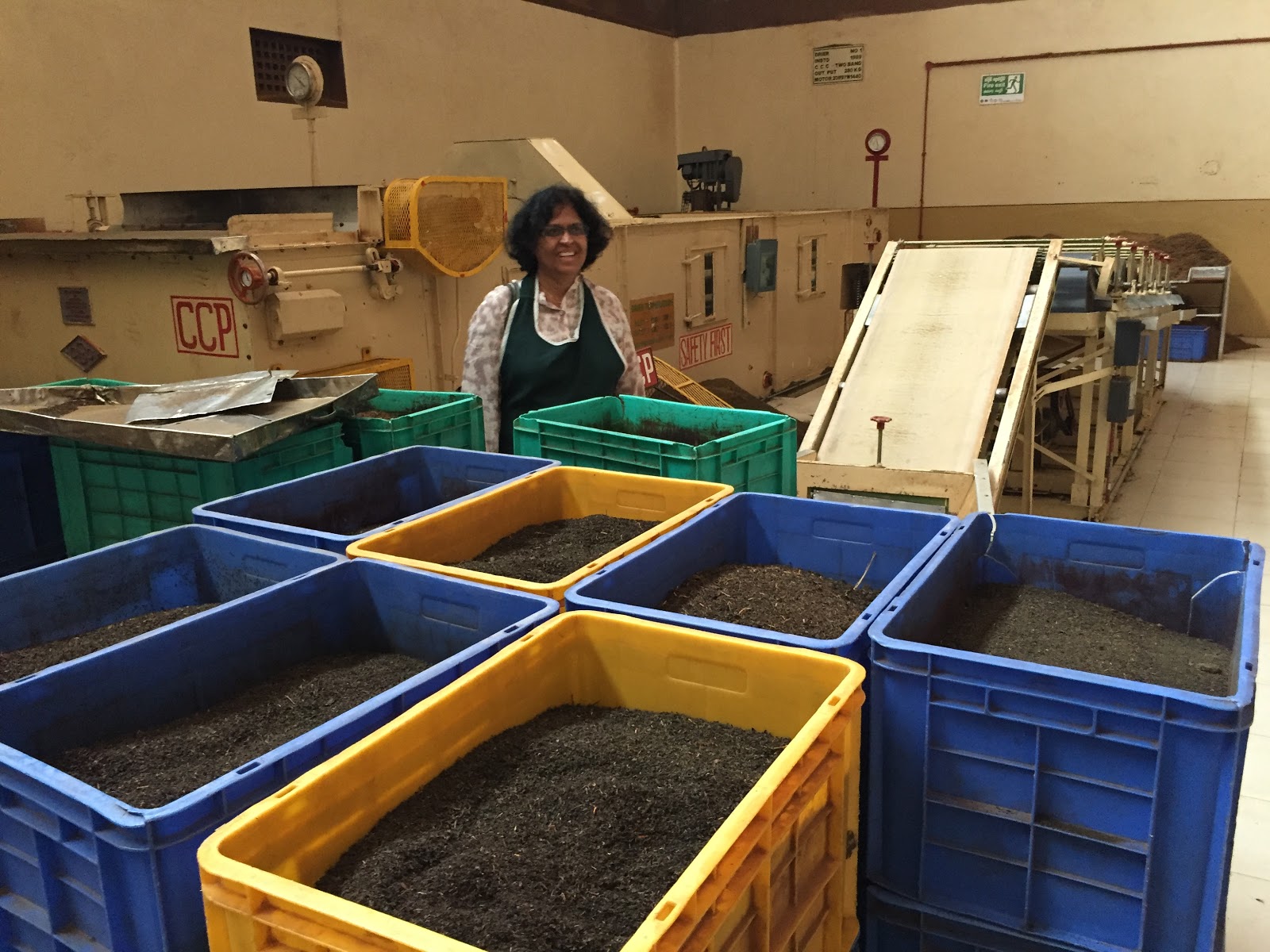
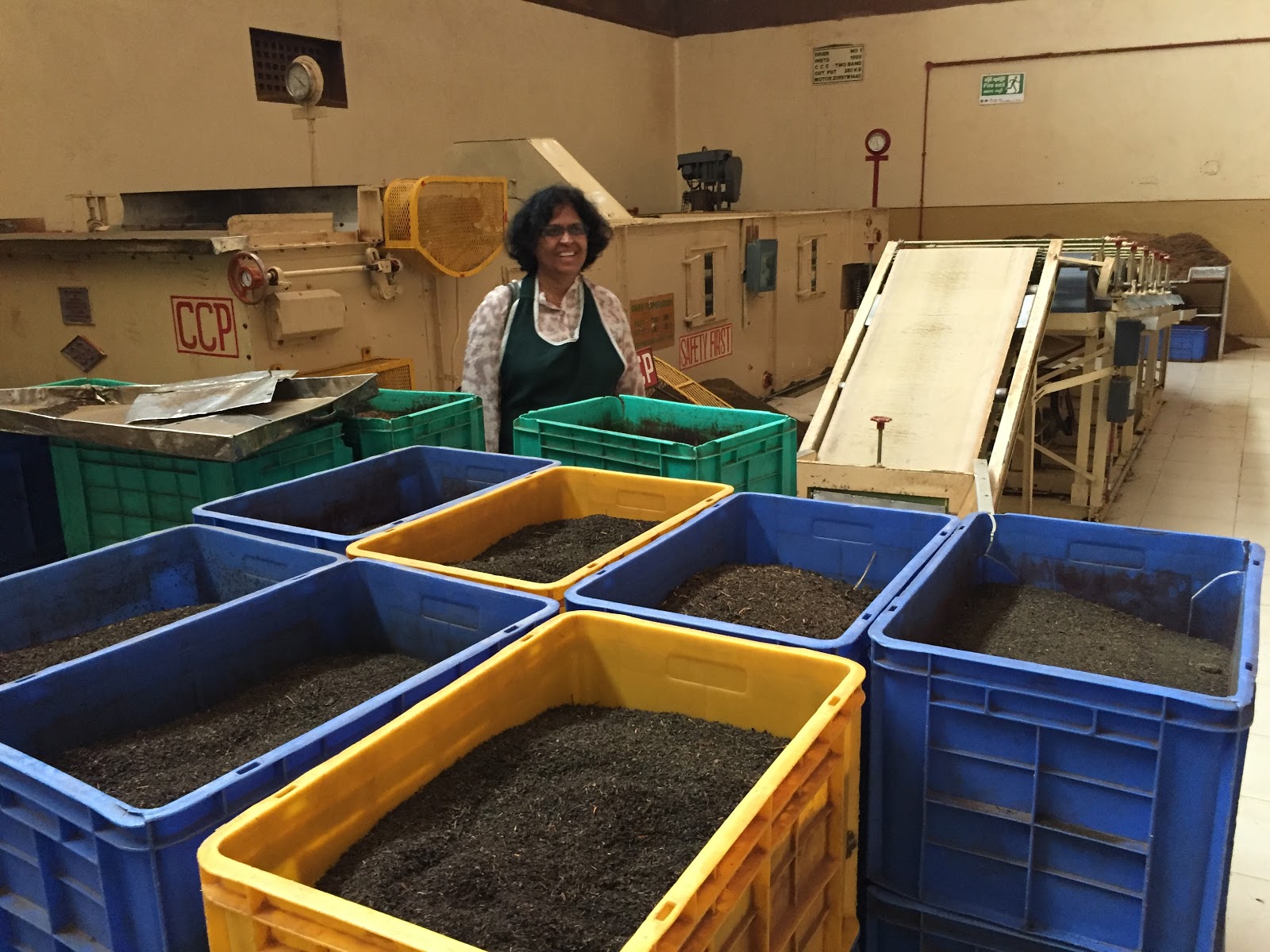
We arrived at the Pedro Tea Plantation in the sunshine. By the time we left it was raining again. Through out our Sri Lanka visit there was intermittent rain, quite heavy, but it always seemed to clear just for our activities.  The tea tour was outstanding. We all learned from it. We watched the leaves arrive in bags from the field, get weighed, then carried upstairs and dumped on long drying tables to reduce moisture. Get rolled around on a teak surfaced round bruising machine. Every stage till it gets into bags to be sold to the famous tea labels of the world.


Finally, we returned with our army escort to the army base for lunch. The base is tucked into a beautiful hillside overlooking a lake in the city center. The lunch was a classic Sri Lanka buffet. We ate, as did the officers, with our fingers. And when waiters brought bowls of warm water to the table, we washed our fingers, left hand covering the right. We were grateful to our new "nephew" for his suggestions and generous invitations.

In the evening, we went to checkout rooms and suites in a new hotel, the Araliya Green City. It was recently built by the brother of the President of Sri Lanka. Just off the lobby,  the gleaming new food court ha a room length kitchen counter divided into food types: pizzas, asian, Arabic, Sri Lankan, Indian, Chinese, American. On one short wall is a bank of sinks, fully exposed, at least a dozen, a lot of sinks, for hand washing. Sunday night they do not allow alcohol, but somehow, beer found it's way into a tea pot and tea cups at our table. We ate falafel and lamb biryani. And sipped "tea".


Wednesday, November 15, 2017

Sri Lanka - Kandy, November 3

Wake up at 7:00 AM in Kandy at the Thilanka Hotel.

At sunrise we heard monkey racket. They were running on corrugated metal in front of, and over, our porch, but not in our room.

Breakfast at 7:45. Buffalo curd (basically a rich plain yogurt, tasting of sour cream), with a spoon of "bee honey". Passion fruit juice. Papaya. Mango. Tiny bananas, red and yellow. Ceylon tea with hot milk.

9:00 AM. We are on the road to the Peradeniya Botanical Garden. Established in the 1800's, it is vast. For one hour, a guide drove us, in a cart, past wonderful things. The largest coconut palms on the planet. A tree of the hardest wood in the world, from Mexico. The largest bamboo specimens. A tree called, Krishna's Cup, planted sixty years ago by Queen Elizabeth, with flowers dangling like little ladles. There was a tree in the distance, like a sprawling umbrella canopy, so large, the many people under it seem tiny. Another tree, so tall, you can hardly see it's top, with smooth bark in pastel colors. Do not sit under the "canon ball" tree. There are several long avenues. One with Cabbage Palms. Another has Palmyra Palms, planted in 1887. We met, also, the tree of brazil nuts and of teak. The teaks in this garden look ancient. They are massive and straight, no wonder they end up as planks.

Cannonball tree flower
Just before Sri Lanka declared independence from Britain, in the 1940's, Lord Mountbatten, had the park to himself. His lovely colonial cottage looks over a great lawn. Now, everyone is welcome. The garden is filled with lovely families of Sri Lankans. I say lovely, because when you make eye contact and smile, their face opens into a radiant lotus blossom of a smile.


Cannonball tree
For the rest of the day, we are driving on curvaceous
mountain roads. We stop for waterfall vistas. We stop for fruit; cherimoyas unlike their American relatives. Mangos, again, unlike our limited varieties at home. The fruit is cut up at the roadside hut. We eat it bare handed. The juice wets are fingers, hands, wrists.  The vendor pours water from a bottle over our sticky paws. In the trees, we can see nest like structures, bee hives. The area around Ramboda is known for their honey. We stop for honey. It is sold in old arrack bottles. Arrack is an island liquor made from coconut; like a coconut tequila. The honey tastes of tropical fruit.  Even the bees like it. They cluster on the sticky bottle caps.

The weather is turning from clear humid heat to dark stormy rainy heat. The mountain roads are verging on flood. New waterfalls cross the road. The rushing water is red, the color of the earth.

It slows us. Eventually, we arrive at the Saint Andrews Hotel in Nuwara Eliya, (pronounced new-o-rellia). The hotel began, as it sounds, as a Scottish property.  The gardens have shrubs snipped into large kettle and tea cup shapes. The public spaces have fire places, welcome on a stormy night. The dining room has about 150 years of age with ceiling panels of embossed copper.

Before dinner, we visited in the lobby with a friend of our travel companion. The visitor is very smart, articulate and took us, somewhat, under his wing.

Tomorrow, he has arranged, we will begin at a fairground, go to a pastry reception, visit a mountain peak, tour a tea plantation and visit his workplace for lunch.


Sri Lanka - Kandy November 2

We are sorry to do it, but, today, we must checkout of this oasis, Water Garden Sigiriya Hotel.

9:30. On the road. Destination: Heritance Kandalama Hotel. We are stopping only to check it out, (en
route to Kandy), particularly the swimming pools.  23 years ago, the hotel was built, more like affixed, onan elevated ridge of boulders one kilometer long. It has three swimming pools. One, an infinity pool, appears to hang over a cliff with a vista of a jagged shored lake and Sigiriya rock, (Wes took a dip in this one). The second pool incorporates the existing smooth boulders into it's bottom. The third pool is conventional, but surrounded by trees full of monkeys, large, small, huge and tiny. Posted signs warn against leaving your windows open unless you want company.


2:00 PM. Another stop on the drive to Kandy: Euphoria Spice. Ruwandi Perera, the proprietor went
to American University in Washington, D.C.  After two semesters, she returned to Sri Lanka for Euphoria Spice, a forest which produces spices: cinnamon, cardamom, cloves, nutmeg — our American winter holiday spices. A guide walked us through the forest. He spoke of medicinal qualities of the spices while my pleasure obsessed brain imagined delicious swoon-inducing flavors. We made the walk in the pouring rain.

3:00 PM. After the spice tour we stopped, across the street, for buffet lunch at "En Famille", an open sided A-frame. They seemed happy to have customers for their 400 rupee ($2.70) buffet. For the first time, our driver ate with us. Typically, he eats apart from us.  It was very good. Curries and such, but mostly vegetable dishes. One dish resembled beef chunks. It was breadfruit. (Or was it jackfruit.) We piled our plates. The driver sat down. I sat down. I picked up a fork. He plunged his fingers into his food. I put my fork down and did the same. For finger eating, I learned you need an effective balance of wet and dry things. And the fingers need to work as if you are making dough: pinching, gathering, swirling.

4:30 PM. Arrive at Kandy. We are racing against the clock. We want to make a 5:00 dance show and make a 6:00 PM temple visit.

Check-in at the Thilanka Hotel, change clothes, quickly.  Note the patio door sign about curious monkeys. Take a short walk to a theater for traditional Sri Lankan folk dances. The costumes were great. The music was good. The dancers were good. For their dramatic finale, we went outside to watch them walk over freshly shoveled hot coals.

6:00 PM. We arrive at the Dalida Maligawa, the Temple of the Buddha Tooth. It is the home of a tooth from Buddha. He died over 2,300 years ago. The relic is kept in a solid gold cone encrusted with rubies, sapphires and emeralds. The cone is in a small room where long elephant tusks rise from floor to ceiling.  Inside the door, a priest, in a saffron robe, greets the worshippers. There is a basket for flowers and money.  The room is in the center of a three floor building. The three-floor building is a gem in the central courtyard of the outer temple building.


We approached the outer building.  We left our shoes with a shoe clerk and walked barefoot up wide stone stairs. The air was hot and heavy. The cool chiseled stone felt good underfoot. Inside, someone was beating drums. Loud. Insistent. Slow. Steady. Then faster. A reed instrument wailed; it's sound was raw. We switched from stone stairs to wooden stairs. The drums beat faster. We arrived into a long wooden-floored ante chamber. A marble topped table ran two-thirds of it's length. It was covered with flowers. Lotus in fuchsia and in white. Heaps of jasmine perfumed the steamy room. It was crowded. Worshippers, palms together, fingers up, hands at their sternum, white pants, white shirts, somber faced, waiting for it to happen. When the decorated metal door opens. When they can see for a second the brilliant gold reliquary. There is a queue. It is long; across the room; down the stairs. That is on one side of the flower topped long table. On the other side, a swarm of people; tourists, backpackers and Buddhists. Some jostle, mostly the tourists, for a good sightline to the door. Others are content to be in the presence of a sacred relic. When the door opens, they feel an energy, presence, spirit without needing to see it. The drums repeat their cycle of slow pulse moving to quick pulse. The night air is sweltering, but in this setting more like sultry. I do not know how often the door opens on the reliquary, but we are lucky it occurred for us. Today, is also a full moon. Sri Lankans celebrate a three day holiday every full moon.

We wandered through other parts of the building. There are rooms and rooms of Buddhas. In one room, three walls are lined with large paintings with words beneath them. Together, they tell, from start to finish, how the Buddha tooth found it's way from the mouth of Buddha to this temple.

The crowds thinned out. Closing time approached. Walking toward the outside, my feet enjoyed the cool stone. They did not want to get back into shoes. Outside, the night air had cooled to perfection. We returned to the Thilanka Hotel. Secured our door against the monkeys and drifted off to blissful sleep.


Saturday, November 11, 2017

Sri Lanka - November 1, 2017


Thursday. Up at 7:00. Cup of Ceylon black tea with milk, no sugar. Excellent day. The rain is gone. There is just enough cloud to temper the sun, still it will be hot.

8:30. In the van. On the road to Polonnaruwa, a UNESCO World Heritage Site. Approximately 50 kilometers northeast of our Sigiriya base. The Sri Lankan names are long. They look complicated, but if you look closely, they are made up of two letter bits, which are a consonant followed by a vowel. Po lon na ru wa. Si gi ri ya.

As we drive, I am reading a bit about Sri Lanka's history. Most recently, starting around 1500, they were occupied/ruled by three countries in succession. Portugal, the Netherlands, and Great Britain; for 150 years each. Sri Lanka declared independence in 1948. The population categories,  in a very general sense, are the Sinhalese (Buddhist), the Tamils (Islamic), and the Moors (Hindu). The majority are Sinhalese. The Moors, the minority and the Tamils in between. Sinhalese recorded history begins around 2300 years ago with the arrival of Vijaya, a prince from North India.

Writing, now, in real time ... We have been on the road, in the van, for an hour. The roadsides continue to be full of colorful unusual sights. The driver points out a "lizard" on a canal bank. We stop. Get out. Walk closer. On the upper bank is a "lizard" 5 feet long, but climbing out of the water is his big brother, 8 feet long nose to tail. A man has a stick. A piece of fish is on the end. (He has done this before). He dangles the fish to tease "big lizard" out of the water, up the bank and to the road. He makes it rear up erect. An impressive white belly under slate gray top. Seriously long tongue. Finally, "big lizard" gets the fish, his treat. The "lizard" wrangler called it a "water monitor". I am relieved. I thought it was a komodo dragon. Komodos eat humans. The wrangler was pleased with a tip of 100 rupees, (70 cents).

We are driving along the border of the Polonnaruwa ruins's border. I will call it a campus of ruins. The campus was once a city. It occupies dozens, if not hundreds, of acres.  There is a bit of a fence with a strand of barbed wire. Inside the fence, the foliage is dense.  The green sprouts from the red earth. We see glimpses of ruins. By ruins I mean footprints of long gone buildings. Occasionally, some or much of a building survives. On the other side of the street cows lounge.  They may belong to someone, but they roam freely.  They are brown or white or black, with horns and without horns. They seem too svelte for eating, unlike our edible American edible cows, fattened up like sumo wrestlers. Over the lake is a vast black swirl of birds.

Now, at the museum for ruins, a posted map shows the vast sprawl we have arrived to. More than can be seen in one day.

One hour later ... We walked quickly through the museum. They have models of how the entire city might have appeared in 1100. The best room, at least my favorite, held original bronze statues of Shiva, Ganesh, etc. Three to four feet tall. Beautiful. Finely wrought. Exquisitely detailed. 900 year old masterpieces in outstanding condition.

The first stop on our ruins walk ... A statue of a man. 9 feet tall. Carved into soft blond stone. A palm leaf straddles his two hands. He wears a sarong-like garment. In front, a belt, stone carved, is tied into a curled bow. He is 900 years old. An open sided shed roof protects him. A few feet away, there is a dome of red brick. It's top is gone. The upward curved walls create a wonderful acoustic. The dome is the centerpiece of a small village surrounded by smaller domes, all gone. The whole is canopied by flowering trees. The air is filled with wafting butterflies and dragonflies. (I have read, people come here for dragonfly safaris). Nearby, beneath a leafy tree and seated on a stone wall, an older man in a sarong sits carving Buddha images into a wooden cane.

Second stop ... We walk through more ruins. There are so many ruins, we could spend the entire day and not see it all. We strive to be more selective, one more site, that will be enough. Onward, past the monkeys. A lot of monkeys. A quick internet check tells me the Polonnaruwa monkeys, (toque macaques), are unique, endangered and spelled like this, in Sinhalese, (the main Sri Lankan language), රිළවා.


Third stop ... Awe inspiring. Truly magnificent. A two hundred foot long boulder was, 900 years ago, carved, (think Mount Rushmore), into Buddha in three positions:  sitting, standing and reclining. The stone has striations of grey and black. The carving is masterful, elegant, graceful. Thinking nothing on this campus can surpass this, we load into the van to leave. The driver suggests one more stop. We say yes, but only one more.

Fourth and final stop ... It would have been wrong to miss this one, the Thiwanka Pilimage.  Superficially, it looks like a melting red brick building. The red brick was once covered in concrete, which was carved into lions, cherubs and miscellaneous gods. Enough of the detail remains to get the picture. Inside, there are frescoes. I overhear a guide, in spanish, speaking of extra terrestrials and kama sutra.  The star of the show is a tall shapely Buddha without a head. Any site with a Buddha statue is sacred and requires shoes off and no photos. I am enjoying the barefoot opportunities.

1:00, en route home ... We stop at Perera and Sons, P&S, for meat pies (cuisine from British colonial days?). We will have them at the aperitif hour with what Bordeaux remains from last night.

On the road home, we encounter an elephant. On the roadside. Peaceful. A thick crust of dirt on it's back. Munching leaves.  It has excellent concentration. Entirely undistracted by the relentless whosh of motor traffic.

Arriving back at the lodge, 2:00 PM ...  Before we left this morning, the kitchen offered, and we are accepting, to have our breakfast late.

We sat outdoors with a view of the Sigiriya rock. We will have the Sri Lankan breakfast. Egg hopper. Buffalo curd yogurt with honey. Etc. Sri Lankan breakfast is a huge amount of food. Rice comes in several forms. A block cooked in coconut milk. Boiled and extruded so it resembles thin noodles. Chopped up with dried coconut powder. Of course, it needs something wet to balance it. Fish curry. Chicken curry. Yellow lentils. You need, too, a vegetable dish. Shredded and marinated cabbage. Thin sliced mango with pineapple.

Sri Lankan breakfast
The rest of the afternoon we will lounge at the pool, in the pool. Looking past the exotic birds in the rice paddies to the majestic Sigiriya rock.


Ceylon Tea: November 4-6

Sri Lanka is where the British established the tea trade in the early 1800's.  The tea grown in central Sri Lanka is said to be the highest quality and commands the highest price from retail tea manufacturers.  We traveled through the center of tea country - from Kandy and Nuwara Eliya to Ella - in order to see the green hills and to see the tea production process.  

The tea hills are divided among many "tea plantations" which are individually owned tea processing facilities ("tea factories").  The tea factories employ hundreds of "tea pickers" who work in the tea hills and pluck the leaves.  The tea pickers are primarily hindu women from india because the wages are too low to attract Sri Lankans.  One of the inspirations for our trip to Sri Lanka was a photo Bernard Millant showed me of tea pickers working in the hills.  I was captivated by their colorful saris and large baskets worn on their backs contrasted against the spectacularly steep and verdant hills and wanted to experience this on our trip.  

The tea produced here is fresh!  Tea pickers deliver the picked leaves to the production site twice a day at the end of their morning and afternoon shifts.  The process begins by weighing each bag of tea leaves and crediting the woman who delivered the bag.  Next the tea leaves are spread in large beds over grates where fans distribute warm air under the leaves - a process referred to as "withering" where the moisture is reduced by about half.  After four hours the leaves are dry enough to break into smaller bits.  More heat is applied and then the leaves are sorted by size and quality and then bagged in 100 kilo bags.  The entire process takes place in a 24 hour period.  By the end of the 24 hours the tea is ready to be trucked to the twice weekly tea auction in Colombo.  At the tea auction retail tea companies purchase the tea for export to their facilities in other countries where the tea is blended, bagged and distributed.  


Terraces of tea plants


Spreading fresh tea leaves on the withering grates

Withering tea


Machine used to separate tea by leaf size